The Emergency Department night shift is not optional
📅 Mon 1 December 2025 at 05:01 GMT

- Senior doctors don't like doing night shifts, but in the Emergency Department, night shifts offer privileged insights which cannot be missed
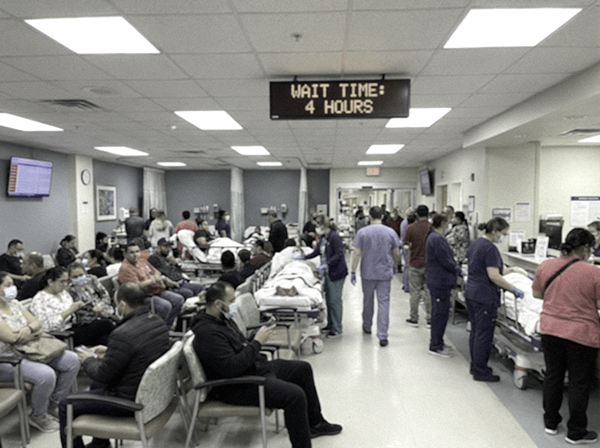
Medical emergencies don’t happen according to a 9-5 schedule. Antisocial hours are therefore part-and-parcel of an Emergency Physician’s lifestyle. For many, night shifts in particular can be a challenging aspect of this speciality.
Of course, I’ve been doing night shifts since I was a pre-registration house officer in the late 1990s. This was before the European Working Time Directive was fully implemented. As surgical senior house officers, our rosters included a shift that started at 8am, required us to work all day and all night, and finished 34 hours later, at 6pm the next day. I don’t know how we pulled that off – it was definitely unsafe – but it was the norm.
One of my enduring memories from those days was assisting at an emergency life-and-death abdominal operation at 3am. I was so exhausted that I kept falling asleep, standing up, while trying to hold the patient’s abdomen open with a big retractor! The professor of vascular surgery – who was trying to reach into the abdomen to stem a major haemorrhage – had to keep hitting my hand to wake me up!
I am now approaching an age where I could opt out of on calls and night shifts, and a few of my peers are already doing this.
I can certainly see the attraction.
When I was younger I scoffed at seniors who said that as you get older, night shifts take a disproportionately heavy toll on the body. It takes longer to feel fully rested afterwards. The disruption to sleeping patterns is more profound. There are studies showing impaired performance at night when you’re older, and possibly even a reduction in life expectancy.
But I’ll tell you this… now I’m reaching that age myself, my body can’t deny whatever my youthful bravado may have tried to deny previously! It’s real, folks.
However, today I read an insightful post on LinkedIn by Dr Himanshu Mirani where he talked about the unreasonable expectations placed on night teams in the Emergency Department. He argues that the staffing at night is reduced in number and seniority, while the clinical demand is at least as great, if not higher at night.
He is calling for a re-think about how Emergency Departments manage the night shift. And it’s not only about having more clinicians.
During the day, the Emergency Department is rostered with senior staff such as consultants who perform important leadership roles. But this does not extend to the night, when arguably the need for senior leadership is greater. He is calling for senior doctors to work at night specifically for their leadership skills, rather than as an extra pair of hands.
Dr Mirani’s argument resonated very strongly with me, and his post made me reflect about whether I should continue doing night shifts. Now that I think about it, there’s a whole host of good reasons why I’d like to!
Firstly, as Dr Mirani identified, increasing out of hours attendances and delays in the processing of patients has resulted in a much greater level of activity in the Emergency Department at night. This alone justifies having the same levels of senior leadership at night, as are provided during the day.
Further, the types of cases that come to the Emergency Department at night can be as complex and serious as during the day.
One factor that is seldom discussed in the context of night shifts is the humanity of team leadership. As a consultant working a night shift, you are privileged to see your team at their worst: everyone’s jetlagged, sleep deprived and tired. It allows you as the senior clinical leader to appreciate first-hand the working conditions you have created and tolerated within your department, and the toll it has on your team.
More importantly, it allows you to witness how your team members operate under a different type of pressure and constraint. On a night shift, every clinician is carrying an increased cognitive workload. Patience and tolerance – amongst both the staff and the patients – run thin. Tempers fray. Frustrations with delays boil over into anger, and sometimes violence. And then there’s suddenly a trauma patient, or a cardiac arrest, or a child death. Sometimes all at the same time. Then in the aftermath, the imperative to pick each other up again, and carry on as best as you can. There is valuable feedback and learning in seeing how your team handles this.
Equally, your juniors see you when you’re not at your most polished best. They see that the consultant is human, vulnerable, and fallible, just like anyone else. This humanisation builds trust, and makes you more approachable when they need you most. This is the front line where the Dunkirk spirit of camaraderie is forged.
The night shift is not a burden that senior doctors should try to escape. Rather, the night shift is a leadership laboratory that senior doctors cannot afford to miss.
The best part of a night shift? The unrousably deep sleep you’re rewarded with after a high-carbohydrate post-nights breakfast… it’s simply heavenly!
What’s there not to like about Emergency Department night shifts?! Sign me up!
Oh by the way, I mentioned anti-social hours at the start. Did you know that senior doctors are contractually incentivised for anti-social hours? When I work a set of nights, I am generously compensated with time off so I can focus on the life part of my work-life balance.
Final thought: times have changed in Emergency Medicine, and the night shift is when the Emergency Department reveals its true reality. It’s no longer appropriate to treat the night shift as an “optional” shift. It needs to be resourced, managed and led in the same way as the day shift is.
And according to Dr Mirani, that’s A Deeper Thought.

For readers who like to pause
A single idea, sent each morning, can shift how you see the day. If that appeals to you, feel free to subscribe below.
 Join the conversation on